Deer Klee Variations
the inspiration
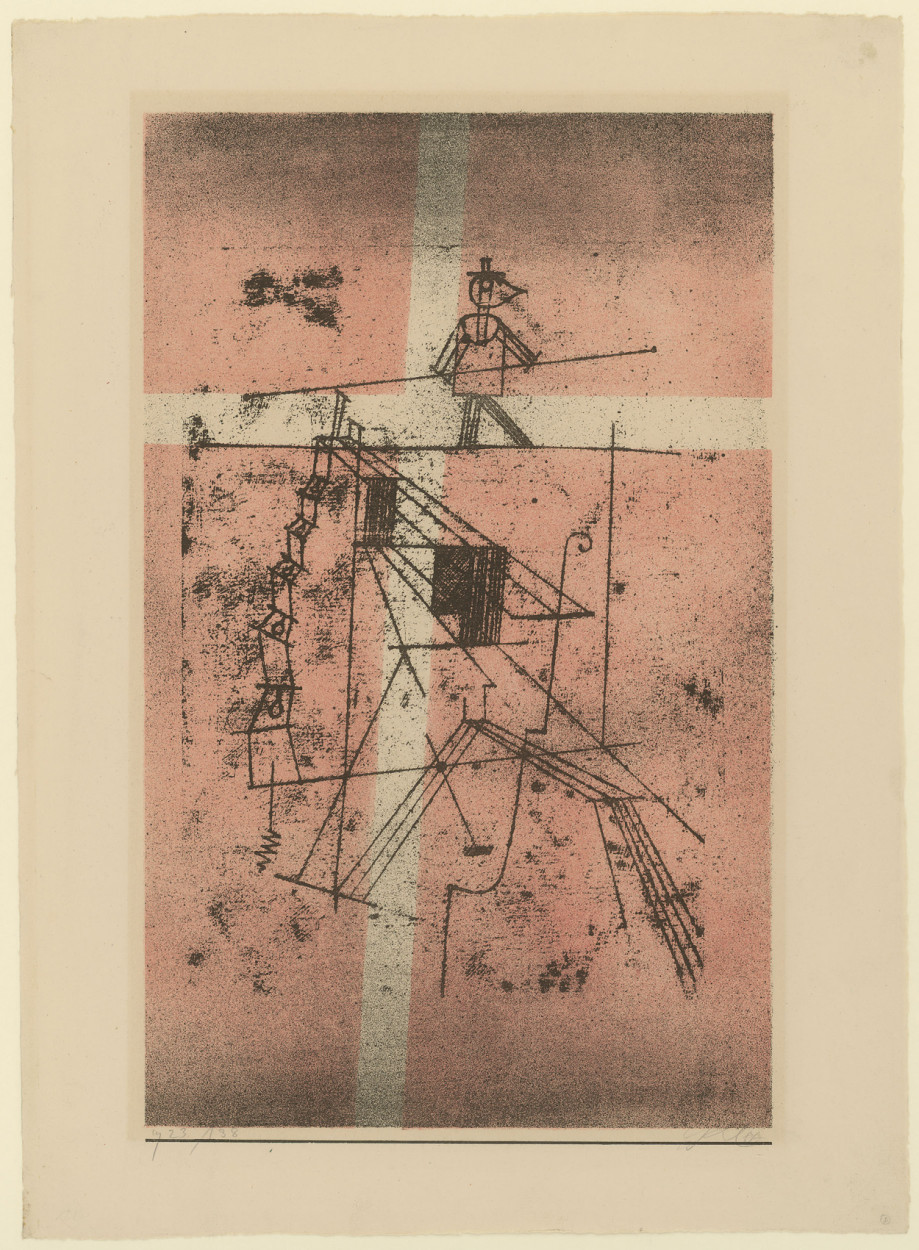
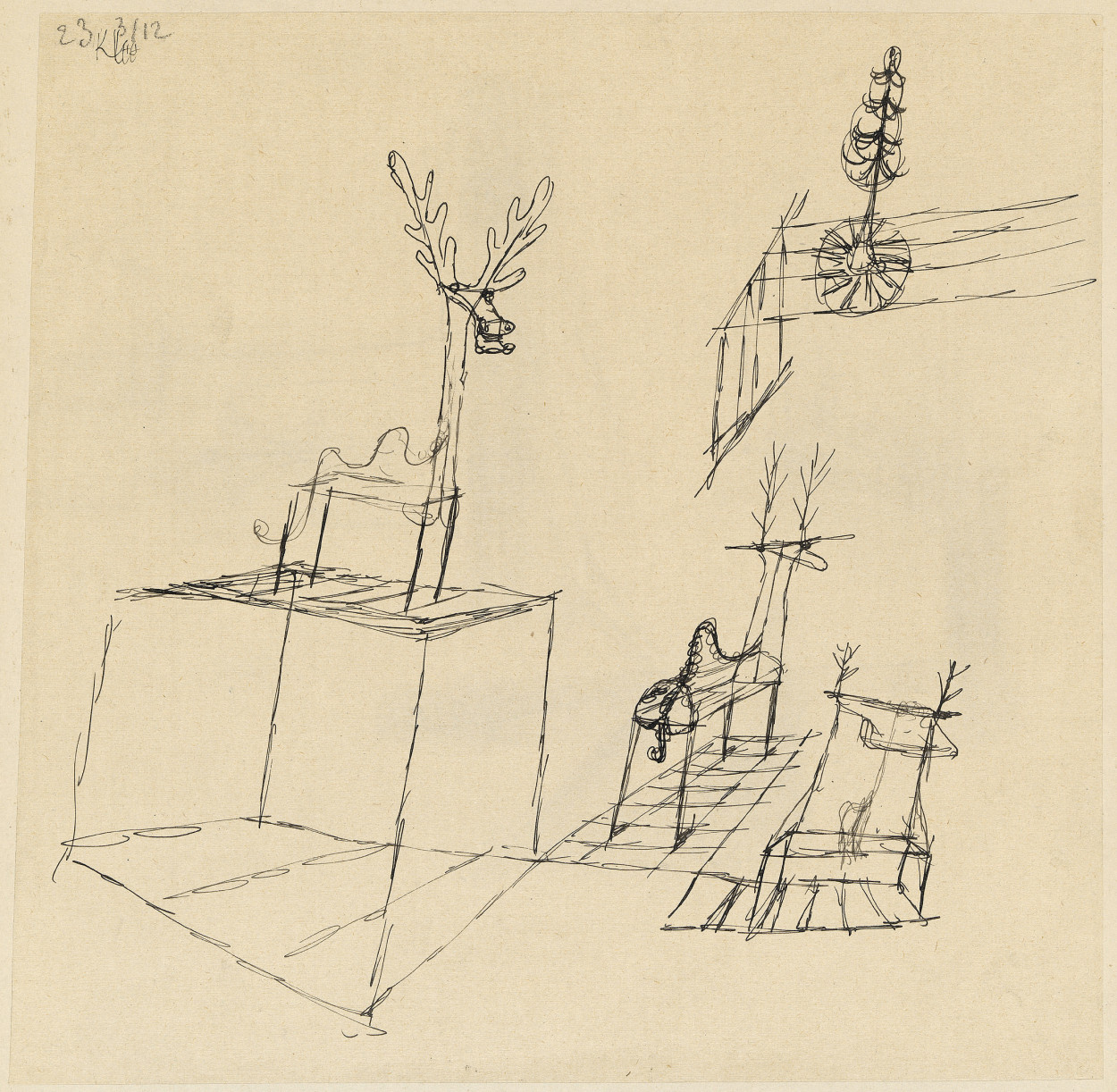
get the image of the one Paul Klee drawing
| paul klee | “seiltänzer” and “kunstvoller Hirschgarten” © 1923 |
 |
 |
refer to the prior connected quadrangles and the postcard compositions and even older images and image-generators
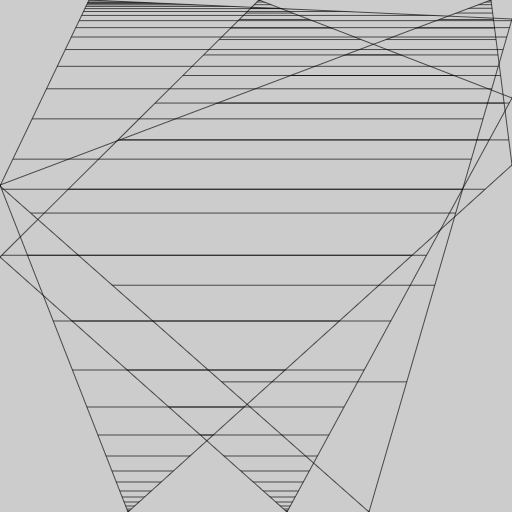
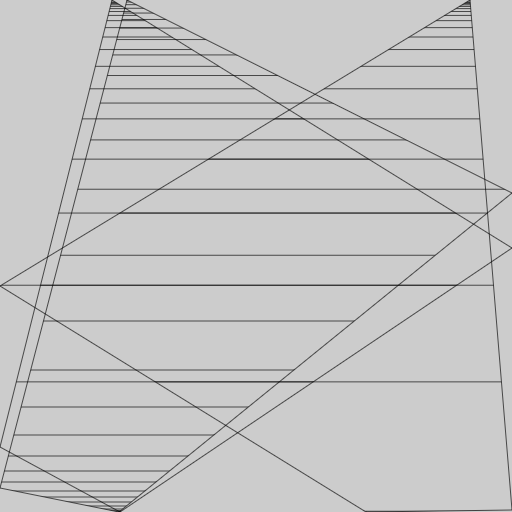
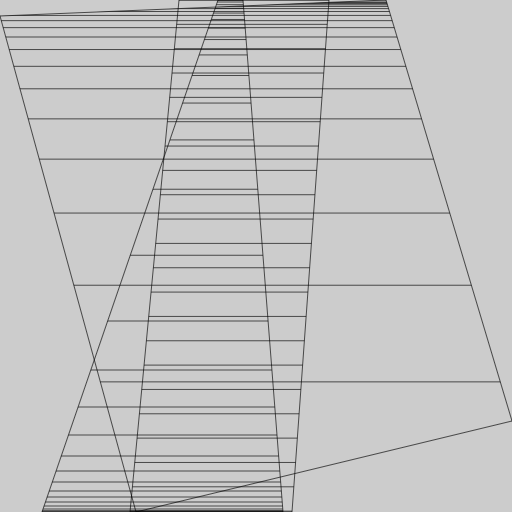
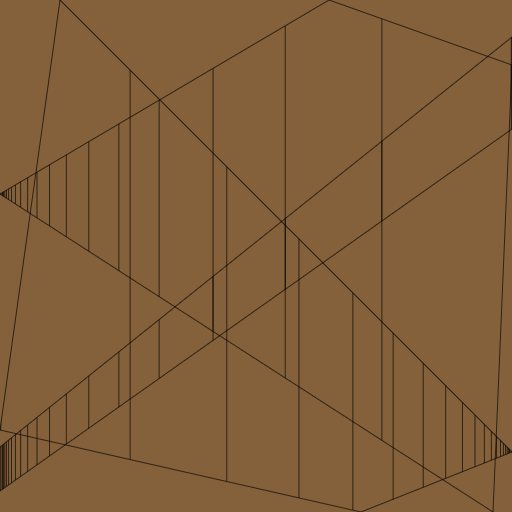
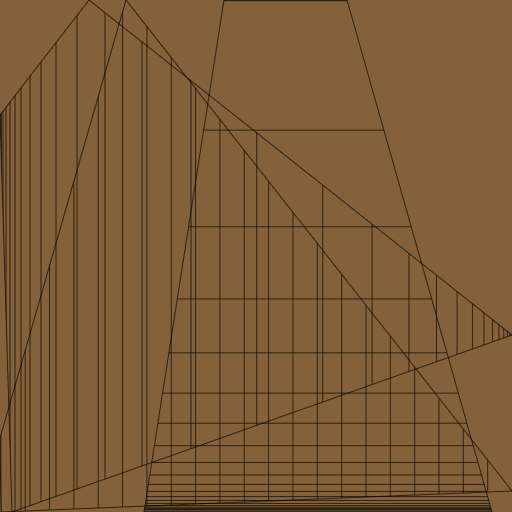
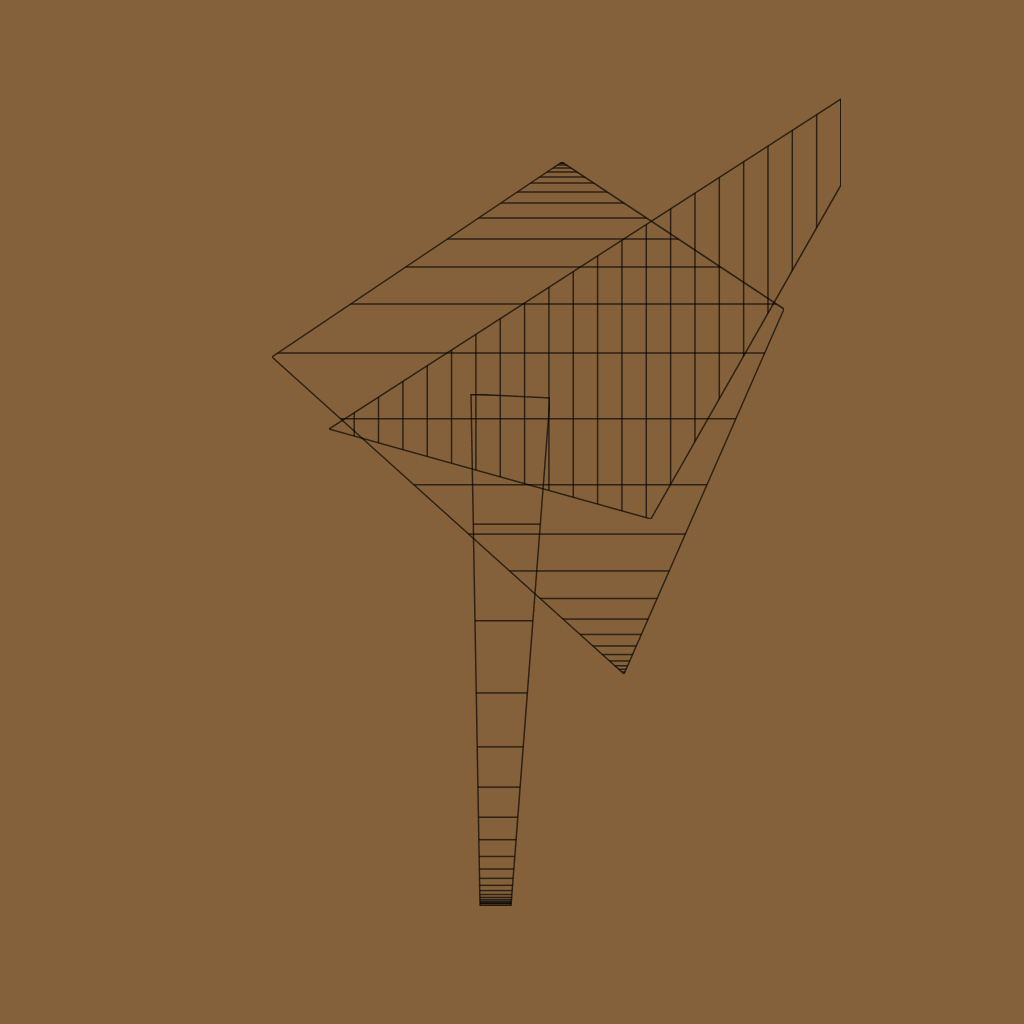
introduce the produced generators
| lieschen mueller | © August 2023 | |
|---|---|---|
 |
 |
 |
 |
 |
 |
 |
 |
 |
Rhythms and Fields: The Landscape Connection
To bridge the gap between the rigid “Apparatus” of Seiltänzer and the organic flow of Hirschgarten, we examine Klee’s landscape works.
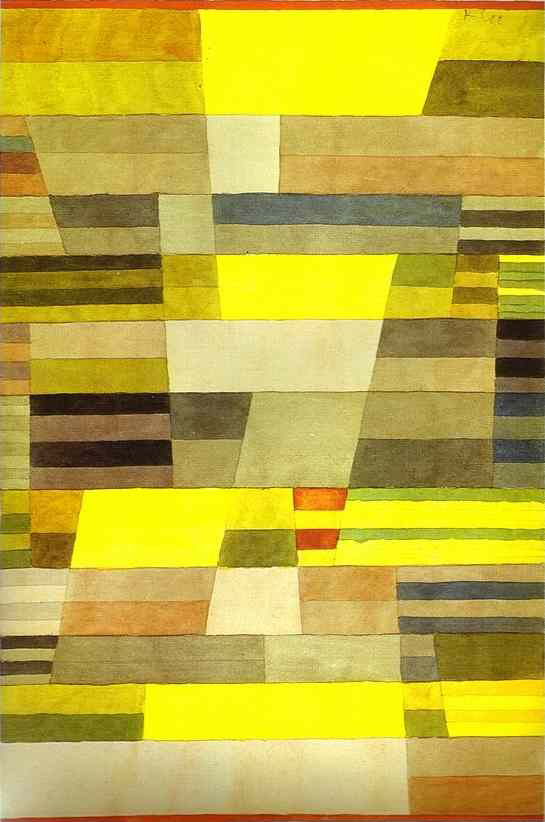
| paul klee | “kamel-in-rhythmischer-baumlandschafr” and “Monument in Fertile Country” © 1929 |
 |
 |
Visual Analysis
- Rhythmic Trees: In Kamel…, the trees are not static objects but rhythmic interruptions of the horizontal lines. This “musical” spacing aligns with our “Parallel Patterns” (Type 3), where lines adapt to the geometry rather than filling it uniformly.
- Fertile Grids: Monument in Fertile Country presents a grid that is topologically rectangular but geometrically distorted. The cells “breathe”—expanding and contracting organically. This informs our “Distorted Mesh” generator, which replaces the Cartesian grid with a randomized, connected mesh.
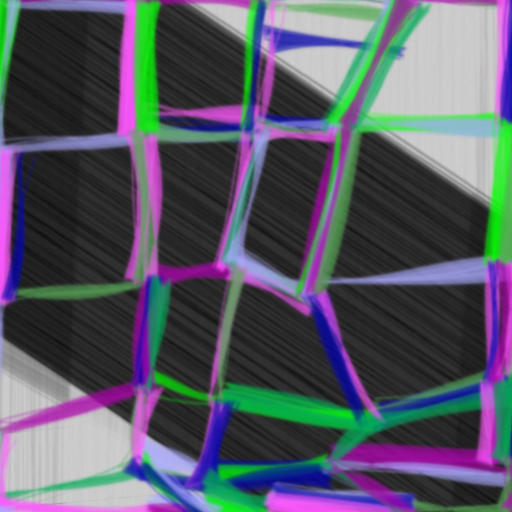
- Oil Transfer & Line Quality: Klee’s technique often involved an “oil transfer” process, resulting in fuzzy, textured lines that bleed into the paper. This serves as the direct reference for our “True Brush” system (
landscape_1b), where lines are composed of multiple jittered “hairs” rather than single vector strokes.
These works demonstrate that the “Grid” and the “Organism” are not separate in Klee’s work—they are fused. The grid is the landscape.
Deer Klee 2 (Modularized)
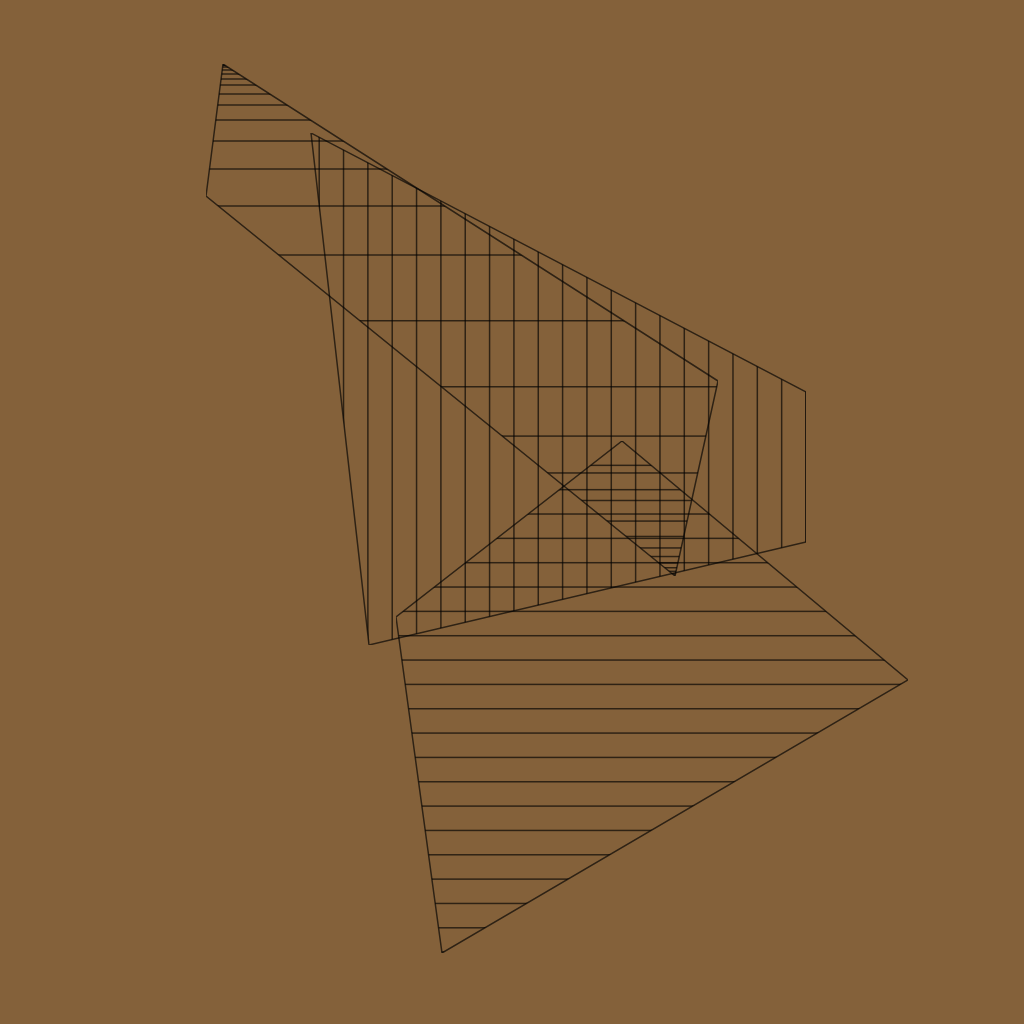
- Merged Version: Combines the geometric validation of the original with the buffer-based rendering and progression patterns of version 1.
- Modular: Refactored into a JavaScript module (
deer_klee_2.js). - Location:
pk/deer_klee_2.html - Sequential Animation: Animates quadrangles one by one in a “Slow TV” style, allowing the viewer to appreciate the construction of each texture.
- Dual Patterns: Introduces a “Cross/Grid” pattern where quadrangles can have two distinct, overlapping line patterns generated simultaneously.
- Parallel Patterns: Added a new line type (Type 3) that draws stripes parallel to the quadrangle’s edges, adapting to the geometry.
- Randomness: Integrated
tweetRandomfor consistent or seedable random number generation, replacing standardMath.random.
Deer Klee 2 Land (Landscape Integration)
- Location:
pk/deer_klee_2_land.html - Sequential Animation: Animates quadrangles one by one in a “Slow TV” style, allowing the viewer to appreciate the construction of each texture.
- Dual Patterns: Introduces a “Cross/Grid” pattern where quadrangles can have two distinct, overlapping line patterns generated simultaneously.
- Parallel Patterns: Added a new line type (Type 3) that draws stripes parallel to the quadrangle’s edges, adapting to the geometry.
- Randomness: Integrated
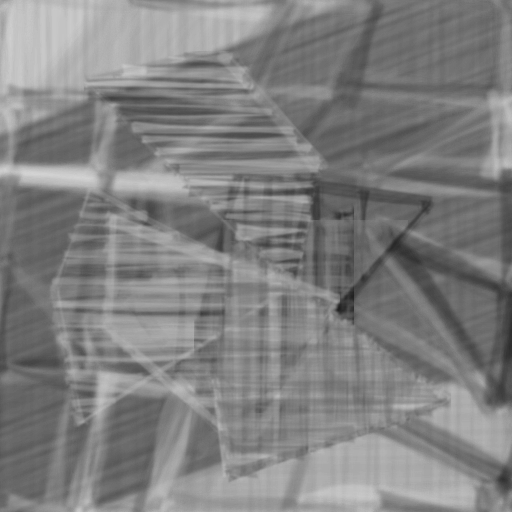
tweetRandomfor consistent or seedable random number generation, replacing standardMath.random. - “True Brush” Rendering: Replaced abstract vector lines with complex
Brushobjects (multiple hairs, jitter, shadow blur) to simulate natural media like ink or charcoal. - Distorted Grid: Implements a non-uniform, topologically rectangular mesh with split/merge logic, creating a breathing “fertile” background.
- 3-Stage Animation: A robust rendering loop that draws the Background, then the Grid mesh, and finally the Quadrangles (line-by-line) with strict buffer clearing to maintain alpha correctness.
 |
 |
lieschen mueller pioer versions © 2022/23 current version © 2025 |
 |
Deer Klee 3D
- Concept: A digital reconstruction of Klee’s “Hirschgarten” logic, translating the 2D “polyphonic” surface into a physical, explorable space.
- The Garden Metaphor: The “Grid” isn’t merely a background pattern; it becomes the “soil” or terrain—a structured yet distorted foundational layer upon which existence stands.
- The Creatures: The quadrangles are liberated from the canvas plane. They become “Gazelles” or “Deers”—semi-abstract creatures existing as independent planes of texture. They inhabit the space between the soil and the viewer, organized by hidden rhythms rather than perspective laws.
- The Stroll: By implementing “Tank Controls”, we invite the viewer to inhabit the composition. It is no longer a static image to be viewed, but a “Garden” to be strolled through. It transforms the “Slow TV” aspect of the generation into a “Slow TV” aspect of exploration.
- Texture as Matter: The “True Brush” textures are projected onto these 3D planes, giving the digital geometry the tactile warmth of ink and paper. It asks: “What if Klee’s paper had depth?”
| lieschen mueller- | © 2026 jan | deer garden | 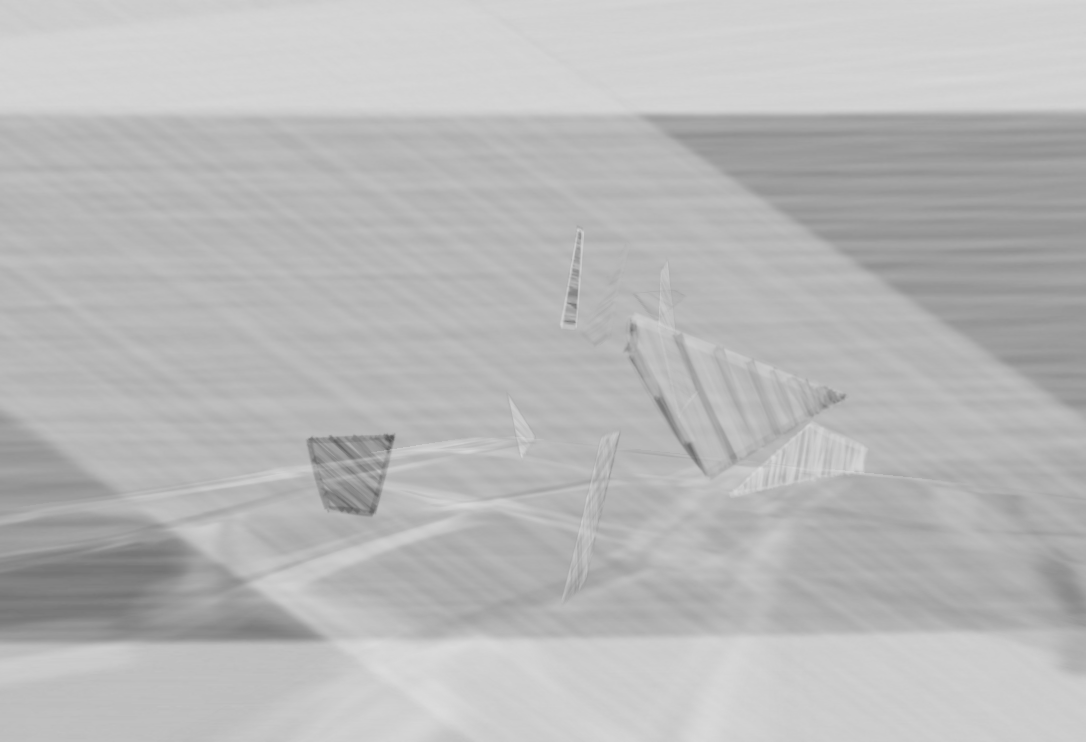 |
Navigation TWELVE KN8S AND OTHER VARIATIONS postcard Compositions McLean Problem